Keeping a green lawn in Gainesville needs a good watering system. Many owners face common irrigation issues that can quickly turn a lush yard into a brown mess. Knowing about these problems is the first step to a healthy lawn.
The local climate in Alachua County poses unique challenges for your sprinkler system. Issues like clogged tips and broken lines can lead to high bills or dry grass. Fixing these problems early helps keep your landscaping a source of pride for years.
This guide will cover common issues and offer practical solutions to keep your system working. We'll explore how to protect your property and save time on yard work. Proper care greatly improves your curb appeal, and keeping your turf hydrated is key to success.
Key Takeaways
- Identify broken heads early to prevent high water bills.
- Adjust timers to match local seasonal weather patterns.
- Clean clogged nozzles to ensure even coverage.
- Regular checks help avoid expensive lawn repairs.
- Understand how sandy soil affects your watering needs.
- Service valves to stop leaks before they start.
Why Gainesville Homeowners Face Unique Sprinkler Challenges
Florida's weather and soil mix up a tough spot for sprinkler systems in Gainesville. Homeowners face a hard environment that can hurt their irrigation systems' efficiency and life span.
The Impact of Florida's Heat and Humidity on Irrigation Systems
Gainesville's subtropical climate brings high heat and humidity all year. This can make water evaporate faster, affecting how much water reaches the lawn. High temperatures can also make sprinkler parts wear out faster, leading to leaks and other problems.
The humidity helps mold and mildew grow, clogging sprinkler nozzles and filters. Keeping the system clean is key to avoiding these issues and keeping it working well.
Sandy Soil and Hard Water Considerations
Gainesville's soil is mostly sandy. Sandy soil drains fast, which is good, but it also means water gets through quickly. This can cause underwatering if the sprinkler system isn't set right.
Also, Gainesville's hard water can build up minerals in the sprinkler system. This can block nozzles and filters, making the system less efficient. Cleaning and maintenance are vital to fight these problems.
| Soil Type | Watering Needs | Maintenance Tips |
|---|---|---|
| Sandy Soil | Frequent watering due to quick drainage | Adjust sprinkler heads for optimal coverage; check for mineral buildup |
| Clay Soil | Less frequent watering due to water retention | Ensure proper drainage; avoid overwatering |
| Loamy Soil | Balanced watering needs | Monitor soil moisture; adjust sprinkler system as needed |
Heavy Rainfall and Seasonal Variations
Gainesville has a wet and dry season, with lots of rain in the summer. This changes how well the sprinkler system works. In the wet season, it's important to adjust watering to avoid wasting water and damaging the lawn.
In the dry season, the system needs to work harder to keep the lawn moist. Regular checks and adjustments can help deal with these seasonal changes.
For Gainesville homeowners, knowing these challenges is the first step to a good sprinkler system. By understanding the local climate and soil, residents can keep their lawns healthy and green all year.
Broken or Damaged Sprinkler Heads
A working sprinkler system is key for a lush lawn. Broken sprinkler heads waste water and cause uneven coverage. This can lead to overwatering in some spots and dryness in others.
Identifying Cracked, Chipped, or Shattered Heads
Regularly check your sprinkler heads for damage. Look for cracks, chips, or shattering. Sometimes, damage isn't obvious, so watch for performance issues like reduced spray or irregular patterns.
Common signs of damaged sprinkler heads include:
- Visible cracks or breaks in the head
- Reduced or uneven water distribution
- Water spraying in the wrong direction
- Increased water bills due to leaks
Lawn Mower Damage and Other Common Causes
Lawn mower accidents often damage sprinkler heads. Hitting a head can crack or break it. Other causes include soil settlement and freezing temperatures, which can also cause damage.
To minimize the risk of damage:
- Be cautious when mowing over areas where sprinkler heads are located
- Consider installing protective covers or markers to make sprinkler heads more visible
- Regularly inspect your sprinkler system for signs of wear or misalignment
Step-by-Step Sprinkler Head Replacement
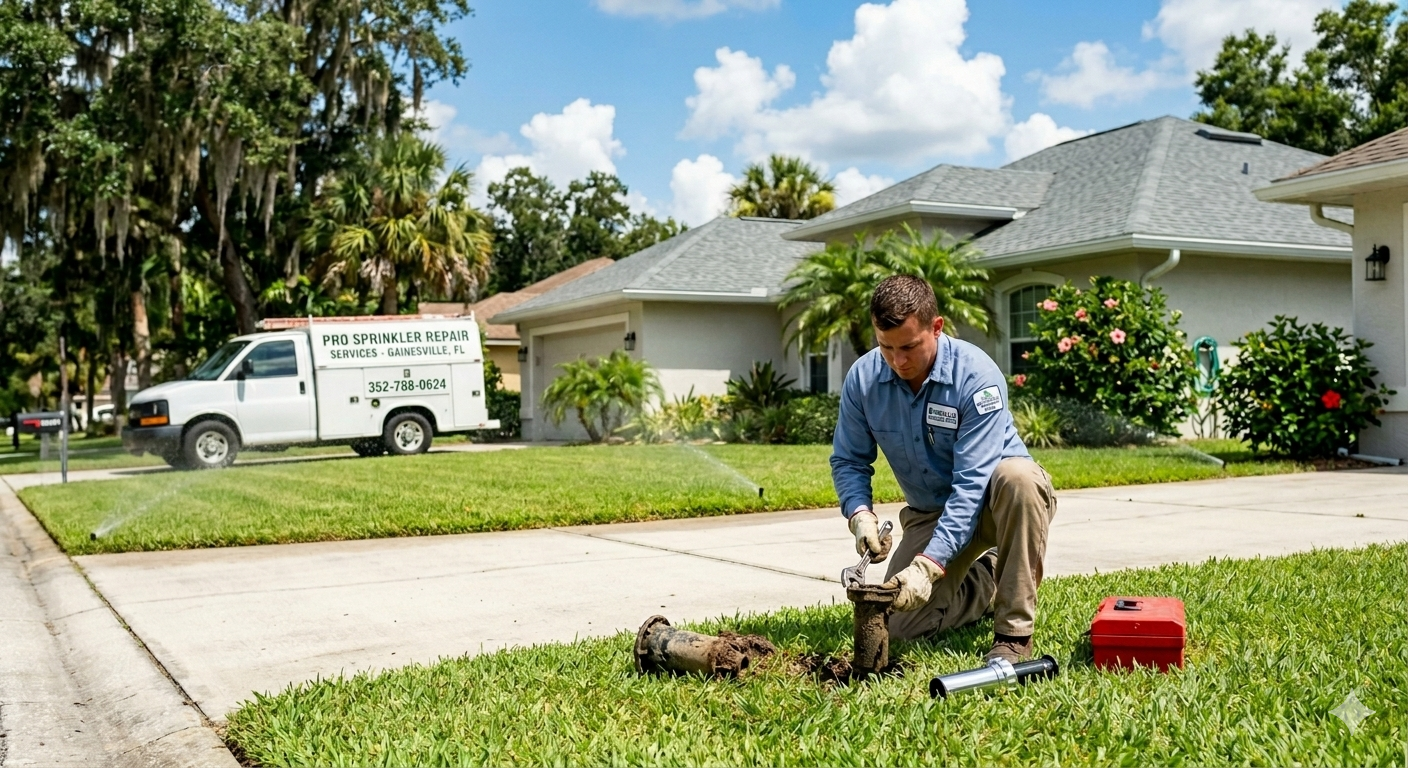
Replacing a broken sprinkler head is easy to do yourself. Here's how:
- Turn off the water supply to your sprinkler system.
- Dig around the broken sprinkler head carefully to avoid damaging the surrounding pipe.
- Unscrew the broken head from the riser or pipe.
- Inspect the riser or pipe for any damage and clean it if necessary.
- Screw the new sprinkler head onto the riser or pipe, ensuring it's securely attached.
- Adjust the new head according to the manufacturer's instructions for proper alignment and spray pattern.
- Turn on the water supply and test the new sprinkler head.
| Tools Needed | Purpose |
|---|---|
| Shovel or trowel | For digging around the sprinkler head |
| Adjustable wrench or pliers | For unscrewing the old head and securing the new one |
| New sprinkler head | Replacement for the damaged head |
Clogged Nozzles and Dirty Filters
Clogged nozzles and dirty filters can really hurt your sprinkler system's performance. They can cause uneven watering, waste water, and higher bills. Keeping up with maintenance is essential to avoid these problems.
Recognizing Reduced Spray Patterns
A change in spray pattern or water pressure often means clogged nozzles or filters. If some parts of your lawn don't get enough water, it might be due to a blockage. Check your sprinkler heads often to spot these issues early.
Common signs of reduced spray patterns include:
- Dry spots on your lawn
- Weak or uneven water distribution
- Increased runoff or pooling water
Mineral Buildup and Debris Accumulation
Mineral buildup and debris can clog nozzles and filters. Hard water, common in Gainesville, can deposit minerals. Dirt, sand, and plant material can also block your system.
To minimize mineral buildup and debris accumulation:
- Use a water filter or treatment system
- Regularly inspect and clean your sprinkler system's nozzles and filters
- Consider using a sprinkler system with a built-in filter or debris trap
Cleaning Techniques for Optimal Performance
Cleaning your sprinkler system's nozzles and filters is easy with basic tools. First, turn off the water supply. Then, remove the nozzle or filter and soak it in a vinegar or cleaning solution mix.
Step-by-step cleaning guide:
- Turn off the water supply to your sprinkler system
- Remove the nozzle or filter
- Soak the nozzle or filter in a cleaning solution
- Use a soft-bristled brush to gently scrub away any debris or mineral buildup
- Rinse the nozzle or filter thoroughly and reinstall it
By following these steps and regularly maintaining your sprinkler system, you can ensure optimal performance and extend the lifespan of your system.
Low Water Pressure Throughout Your System
Low water pressure is a common problem with sprinkler systems. It can cause inefficient watering, leading to some areas getting too little water and others too much. It's important to understand why this happens and how to fix it to keep your lawn healthy and green.
Weak Spray and Incomplete Coverage Symptoms
A weak spray from sprinkler heads is a sign of low water pressure. If the water doesn't spray as far as it should, or if your lawn has dry spots, it's a problem. Incomplete coverage can make your lawn look bad and lead to uneven growth and disease.
Main Line Leaks and Valve Issues
Leaks in the main line or valve problems often cause low water pressure. Leaks can happen due to damage or deterioration over time. Valve issues might be from faulty installation, wear and tear, or debris. Finding and fixing these problems is key to getting your system's pressure back up.
| Cause | Symptoms | Solution |
|---|---|---|
| Main Line Leaks | Reduced water pressure, wet spots | Inspect and repair or replace damaged sections |
| Valve Issues | Zones not turning on/off, low pressure | Clean or replace faulty valves |
Testing and Restoring Proper Pressure
To check water pressure, use a pressure gauge at the test valve. If the pressure is too low, you need to find and fix the problem. Fixing it might mean repairing leaks, cleaning or replacing filters, or adjusting the system. For tricky problems, getting help from professional sprinkler services in Gainesville is a good idea. They can make sure your system works well.
Leaking Valves, Pipes, and Connections
Finding and fixing leaks in your irrigation system is key to a healthy lawn and saving water. Leaks can happen in valves, pipes, and connections. This can waste water and harm your lawn.
Spotting Wet Spots and Unusually Green Patches
Wet spots or green patches on your lawn might mean a leak. These areas get too much water, making them look greener than the rest. Check your lawn often to spot these signs early.
Wet spots are easy to see after the sprinklers stop running. They stay wet while the rest of the lawn dries. Green patches suggest a slow leak giving extra moisture.
Common Leak Points in Underground Systems
Underground sprinkler systems often leak at specific points. Corrosion over time can cause holes or cracks in pipes. This leads to leaks.
Look for leaks in these areas:
- Joints where pipes connect
- Areas around sprinkler heads and valves
- Sections of pipe near trees or obstacles
Sealing Minor Leaks and When to Replace Components
For small leaks, you might fix them with a pipe repair kit or by tightening connections. But, big or serious leaks need new parts.
| Leak Severity | Recommended Action |
|---|---|
| Minor | Seal with pipe repair kit or tighten connections |
| Moderate | Replace affected components (e.g., pipes, valves) |
| Major | Consult a professional for repair or replacement |
Regular checks and upkeep can find leaks early. This stops big water waste and lawn damage. Fixing leaks fast keeps your sprinkler system working well.
Timer and Controller Malfunctions
When your sprinkler system's timer and controller go wrong, it messes up your watering schedule. These parts are key to knowing when and for how long to water. Problems with them can waste water and harm your lawn.
System Won't Turn On or Off Automatically
If your sprinkler system won't turn on or off by itself, it might be the timer or controller's fault. First, check the power source and make sure the timer is set right. Sometimes, just resetting it fixes the problem.
Common causes include:
- Power outages or electrical surges
- Incorrect programming or settings
- Faulty wiring or connections
Programming Errors and Battery Issues
Setting up your sprinkler timer wrong is a common mistake. Make sure you've set the right watering schedule, days, and times. Also, check the batteries in your timer. Dead or weak batteries can cause problems.
Tips for avoiding programming errors:
- Double-check your programming settings
- Use a timer with a clear and intuitive interface
- Keep a written record of your watering schedule
Resetting and Troubleshooting Your Controller
Resetting your controller might fix your sprinkler system's issues. Look in your user manual for how to reset it. If it doesn't work, try troubleshooting like checking for firmware updates or getting help from a pro.
| Troubleshooting Step | Description |
|---|---|
| Check Power Source | Ensure the controller is receiving power and that there are no issues with the electrical supply. |
| Verify Programming | Double-check that the watering schedule is correctly programmed. |
| Inspect Wiring | Check for any damage or issues with the wiring connecting the controller to the valves. |
By following these steps and understanding common timer and controller problems, you can fix your sprinkler system yourself. This way, you can get it working efficiently again.
Common Sprinkler Problems in Gainesville Homes: Uneven Coverage
Uneven water distribution is a common issue in Gainesville homes. It affects lawn health, causing dry spots and overwatered areas. This makes the lawn look unhealthy.
Dry Spots and Overwatered Areas
Dry spots happen when some lawn areas get too little water. Overwatered areas get too much. Identifying these issues is key for even coverage. Watch your lawn during sprinkler use to spot these problems.
Experts say, "A good sprinkler system covers the lawn evenly. This ensures every part gets the right water."
"Uniform water distribution is key to maintaining a healthy, lush lawn."
Adjusting Spray Radius and Head Positions
Changing the spray radius and head positions helps a lot. Check each sprinkler head for even water spray. Make sure it's not blocked by trees, bushes, or furniture.
- Check each sprinkler head for proper alignment and adjust as necessary.
- Ensure that the spray radius is appropriate for the area it's covering.
- Remove any debris or obstructions that might be affecting the sprinkler's performance.
Fixing Misaligned Zones and Overlapping Issues
Misaligned zones and overlapping spray patterns cause uneven coverage. Fixing these involves realigning sprinkler heads. Adjust their spray patterns for even water distribution.
Proper adjustment of sprinkler heads prevents waste. It ensures every lawn part gets the right water. This improves lawn health and saves water.
Preventive Sprinkler Maintenance for Gainesville FL Residents
In Gainesville, FL, keeping your sprinkler system in check is essential. The local weather makes it a must. Regular upkeep saves water and avoids expensive fixes.
A well-cared-for sprinkler system keeps your lawn looking great. It stops problems like uneven watering and high bills. This way, you save money and water.
Monthly Inspection Checklist
Check your sprinkler system every month. This catches issues early. Here's what to look for:
- Inspect sprinkler heads for damage or blockages.
- Check valves for signs of leaks or wear.
- Ensure the controller is programmed correctly and functioning as expected.
- Look for wet spots or areas of overwatering.
- Verify that the system's pressure is within the recommended range.
Seasonal Maintenance Tasks
Each season brings its own challenges. Adjust your maintenance routine:
- In spring, inspect for damage from winter and adjust sprinkler heads for the new season.
- During summer, check for signs of overwatering and adjust the watering schedule as needed.
- In fall, prepare your system for the cooler months by draining it if necessary and adjusting the watering schedule.
- In winter, ensure that your system is winterized to prevent freezing and damage.
Extending Your System's Lifespan
To make your sprinkler system last longer, try these tips:
- Regularly clean filters and nozzles to prevent clogs.
- Avoid overwatering, which can lead to system wear and increased water bills.
- Protect your system from physical damage by marking the location of underground pipes and valves.
- Consider upgrading to more efficient components or smart controllers.
By following these tips, Gainesville FL residents can keep their sprinkler systems running smoothly. This ensures their lawns get the right water, saves water, and cuts down on repair costs.
When to Contact Gainesville Sprinkler Repair Professionals
DIY repairs can solve small problems, but big issues need pros. Knowing when to ask for help keeps your system working well.
Complex Repairs Beyond DIY Capabilities
Some sprinkler problems are too hard for DIY. Issues like main line problems, complex valve issues, or system controller malfunctions need experts. If you're not sure or don't have the right tools, it's time to call a pro.
Signs that you need professional help include:
- Persistent leaks or water pooling around the sprinkler system
- Unexplained increases in your water bill
- System components that are damaged beyond simple repair
Benefits of Professional Sprinkler System Troubleshooting
Professional troubleshooting has many benefits. Experts can find and fix problems fast, saving time and preventing more damage. They have the right tools and know-how to do the job well.
Professional services also provide:
- Accurate diagnosis of complex problems
- Expert repair and replacement services
- System maintenance advice to prevent future issues
Finding Qualified Sprinkler System Specialists in Gainesville
To find good sprinkler specialists in Gainesville, look for those with experience and good reviews. Check online and ask friends for recommendations.
When selecting a professional service, consider:
- Their experience with your type of sprinkler system
- Customer reviews and ratings
- Availability for emergency repairs
Conclusion
Gainesville homeowners deal with special challenges in keeping their sprinkler systems working. Problems like wasted water, higher bills, and unhealthy lawns can happen.
Regular upkeep is key to avoiding issues like broken heads, clogged nozzles, and low pressure. Check your system every month and do seasonal maintenance. This keeps your lawn watered right and your system running long.
If you face big repairs, call on skilled sprinkler system experts in Gainesville. They can quickly find and fix problems, making your system work great again.
Knowing about common sprinkler issues in Gainesville and taking care of your system helps. You'll get a beautiful lawn, save water, and help the environment.
FAQ
What are the most frequent Common Sprinkler Problems in Gainesville Homes?
Homeowners in Gainesville often face issues like clogged nozzles from debris. Broken sprinkler heads from lawn mowers are common too. Uneven coverage is another problem, mainly during our hot summers. Spotting these problems early can save you money and keep your lawn looking great.
Why is regular sprinkler maintenance Gainesville FL so important for my lawn?
Our intense heat and sandy soil make your system work harder. Regular maintenance stops mineral buildup from hard water. It ensures your grass gets the water it needs, vital for the dry season.
Can I handle DIY sprinkler repairs, or should I call a pro?
You can handle simple tasks like cleaning filters or replacing a broken head yourself. But, for bigger issues like main line leaks or electrical problems, it's best to call a professional. They ensure the job is done correctly.
What should I do if I notice low water pressure throughout my system?
First, check the main shut-off valve to make sure it's open. If the pressure is low, look for wet spots or green patches in your yard. These often mean an underground leak. Fixing these issues quickly helps prevent water waste.
How do I fix uneven watering and dry spots in my yard?
Adjusting the spray radius and head positions can solve this. Heads can shift or become misaligned over time. By fine-tuning the spray direction and ensuring zones overlap, you can fix brown patches and ensure even watering.
What are the signs that I need to hire professional sprinkler services Gainesville?
If your controller won't turn on, you can't find a leak, or your water bill spikes, call a pro. Specialists have the tools to find and fix underground faults without digging up your yard.
How does hard water affect my irrigation system in North Florida?
Gainesville's water can cause scale buildup in your system. This restricts water flow and can seize components. Regular cleaning and using high-quality components can help prevent these issues.

0 Comments