Did you know a single leaking pipe can waste over 25,000 gallons of water in just one season? This is a shocking fact that shows how much a hidden leak can cost you. Homeowners in Florida often face the challenge of keeping their grass green during the hot and humid summer months.
Finding a sprinkler zone detection issue gainesville neighbors often face takes patience and a sharp eye. You might see large puddles in your driveway or dry spots on your lawn. These signs mean your irrigation system needs a check-up to avoid more damage.
Fixing these troublesome problems helps your garden survive the extreme heat. A well-kept yard increases your home’s value and makes your neighborhood look great. Fixing these issues early can save you a lot of money on water and plant replacements.
Understanding Sprinkler Zones and How They Work
Sprinkler zones are essential for any irrigation system. They help keep your lawn and garden healthy. In Gainesville, FL, knowing how they work is key for fixing irrigation problems.
A good sprinkler system has zones for efficient watering. This way, each part of your lawn or garden gets the right amount of water. It saves water and makes sure everything is well-watered.
What Is a Sprinkler Zone?
A sprinkler zone is a part of your lawn or garden that gets water from specific heads. Each zone can be watered on its own. This lets you water different areas at different times, based on their needs.
Components of a Zone System
A zone system has a few main parts. The zone valve controls water flow to the sprinkler heads. The sprinkler heads spread water over the area. The controller tells the system when and for how long to water each zone.
How Zone Controllers Communicate with Valves
The controller talks to the valves through electrical signals. When it’s time to water a zone, it sends a signal to the valve. This opens the valve, letting water flow to the sprinkler heads.
Knowing how sprinkler zones work helps homeowners fix problems. It’s very useful in Gainesville, where hard water and sandy soil can affect systems.
Common Signs Your Sprinkler Zone Has Failed
Sprinkler zone failures can be sneaky, but spotting them early is key. Knowing the signs helps prevent damage. It keeps your lawn in top shape in Gainesville, FL.
No Water Flow in Specific Areas
When some parts of your lawn don’t get water, it’s a clear sign of trouble. This could be due to clogged sprinkler heads, broken pipes, or faulty valves.
- Look for damage or blockages.
- Make sure sprinkler heads are clean and aligned right.
- Find dry spots on your lawn that don’t get better with watering.
Weak Water Pressure in One Zone
Weak water pressure in one zone points to a problem. Low water pressure might come from leaks, clogged filters, or valve issues.
Zone Runs Continuously Without Stopping
A zone that won’t stop running is a red flag. It could mean a faulty controller or a stuck valve. This wastes water and can harm your lawn.
- Check the controller for any mistakes in programming.
- Look for debris or damage on the zone valve.
- Think about replacing the controller or valve if needed.
Controller Shows Zone Active But Nothing Happens
If your controller says a zone is active but no water flows, it’s a sign of trouble. The problem might be with the electrical signal or the valve itself.
- Make sure the wiring is good and not damaged.
- Test the solenoid to see if it works right.
- Look for error messages on the controller.
Knowing these signs helps Gainesville homeowners fix sprinkler zone problems fast. This keeps lawns healthy and saves water.
Sprinkler Zone Detection Issue Gainesville: Local Factors to Consider
Gainesville’s unique environment can affect your sprinkler system. The city’s hard water, sandy soil, frequent lightning, and changing water pressure can cause problems.
Gainesville’s Hard Water Impact on Zone Valves
Gainesville’s hard water can clog your sprinkler system’s valves and pipes. This buildup can make valves stick or not close right, leading to leaks or not working.
Common issues caused by hard water include:
- Scale buildup on valve components
- Reduced water flow due to clogged pipes and nozzles
- Corrosion of metal parts over time
Florida’s Sandy Soil and Shifting Ground Effects
Florida’s sandy soil can cause the ground to shift and settle. This can damage your sprinkler system’s underground pipes and wiring.
Potential problems include:
- Broken or damaged wires due to ground movement
- Pipe damage from roots or settling soil
- Misaligned sprinkler heads
Lightning and Electrical Storm Damage to Controllers
Gainesville often has lightning storms. These can harm your sprinkler controller’s electrical parts.
Potential damage includes:
- Destroyed circuit boards
- Blown fuses or tripped circuit breakers
- Corrupted programming or settings
Alachua County Water Pressure Variations
Water pressure changes can impact your sprinkler zones. Alachua County’s water pressure can change due to demand, mainline breaks, or other reasons.
| Water Pressure Issue | Effect on Sprinkler Zone |
|---|---|
| Low Water Pressure | Weak or uneven watering |
| High Water Pressure | Broken sprinkler heads or misting |
| Fluctuating Pressure | Intermittent zone operation issues |
Testing Your Sprinkler Controller for Zone Problems
The sprinkler controller is like the brain of your irrigation system. Testing it is key to finding zone problems. To fix issues in Gainesville, FL, you must know how to test your controller right.
Performing Manual Zone Activation Tests
Start by doing a manual zone test. This means turning on each zone at the controller to see if it works. Here’s how to do it:
- Go to your sprinkler controller and enter the manual mode.
- Select each zone one by one and turn them on manually.
- See if the valves open and water flows through the sprinklers.
If a zone doesn’t turn on, it might be a controller, wiring, or valve problem.
Checking Controller Display for Error Codes
Modern controllers show error codes when there’s a problem. Look at your controller’s display for any error messages or codes. These codes can tell you what’s wrong, like wiring, valve, or programming issues.
Common Error Codes and Their Meanings:
| Error Code | Description | Possible Cause |
|---|---|---|
| E01 | No water detected | Clogged filter or faulty sensor |
| E02 | Zone not responding | Wiring issue or faulty valve |
| E03 | Controller malfunction | Internal controller fault |
Inspecting Power Supply and Circuit Breakers
A bad power supply or a tripped circuit breaker can mess up your controller. Make sure the controller gets power and check the circuit breakers.
Steps to Check Power Supply:
- Make sure the controller is plugged in right.
- Check the circuit breaker or fuse box for any tripped breakers or blown fuses.
- If you have a backup battery, check if it’s working.
Verifying Programming Settings
At times, the problem is with the programming, not the hardware. Make sure your controller is set up right, with the correct start times, durations, and days.
By following these steps, you can test your sprinkler controller well and find zone problems. Regular checks and upkeep can stop problems and keep your system working well.
Diagnosing Zone Valve Problems in Your System
Identifying zone valve problems is key when troubleshooting your sprinkler system. Zone valves control water flow to different parts of your landscape. Issues with these valves can cause inefficient watering, waste resources, and damage your lawn or garden.
Locating Your Zone Valves in Gainesville Landscapes
The first step is to find your zone valves. In Gainesville, they’re usually near the sprinkler controller or buried underground. Look for rectangular or circular boxes, often marked with a lid or hidden among plants. Once you find the valve, you can start checking for problems.
Testing the Solenoid with a Multimeter
A multimeter is great for testing the solenoid, a key part of your zone valve. Set your multimeter to the ohms setting and measure the resistance across the solenoid wires. A good solenoid reads between 20-50 ohms. If it’s higher or shows an open circuit, it might be faulty.
Manual Valve Operation Test
To diagnose further, try a manual valve operation test. Open and close the valve manually to see if it works right. If it doesn’t move smoothly, it could mean a problem with the valve or debris buildup.
Common Valve Failures
Knowing about common valve failures helps you fix issues faster. Some common problems include:
Debris and Mineral Buildup in Valve Bodies
Debris and minerals can build up inside the valve body, causing problems. Regular cleaning and maintenance can prevent this.
Torn or Damaged Diaphragms
The diaphragm is a key part of the zone valve. If it’s torn or damaged, the valve won’t work right. Check the diaphragm often to catch issues early.
Stuck Valve Mechanisms
Valve mechanisms can get stuck due to corrosion, debris, or wear. This can stop the valve from opening or closing, causing sprinkler system problems.
By knowing these common issues and doing regular maintenance, you can keep your sprinkler system working well. If you’re having ongoing problems with your zone valves, it’s time to get help from a professional for irrigation system troubleshooting in Gainesville.
Wiring Issues That Prevent Zone Operation
Wiring problems often cause sprinkler zone failures in Gainesville, FL. Over time, connections between the controller and zone valves can wear out. Knowing the common wiring issues can help you find and fix the problem.
Corroded Wire Connections in Valve Boxes
Gainesville’s humid climate leads to corrosion in valve boxes. Moisture can get in and corrode wire connections. This stops the electrical signal from reaching the valve, causing zone failure. It’s important to check wire connections regularly to keep your sprinkler system working.
Signs of corroded wire connections include:
- Rusted or greenish discoloration on the wires
- Frayed or brittle wire insulation
- Intermittent zone operation
Cut or Damaged Underground Wires
Underground wires can get damaged by lawn mowing, roots, or excavation. A cut or damaged wire can stop the signal to the zone valve, preventing it from working. Knowing where underground wires are is key to avoiding damage.
Common causes of underground wire damage:
- Lawn mower or edger accidents
- Root intrusion from trees or shrubs
- Excavation or digging for utility repairs
Short Circuits Between Zones
A short circuit between zones can make the controller malfunction. This can lead to zones not working right or the whole system failing. This problem often comes from damaged insulation or bad wiring during installation.
Wire Connector Failures in Wet Conditions
Wire connectors can fail if they get wet. Using waterproof connectors and making sure they’re sealed can prevent this.
Here’s a quick guide to common wiring problems and how to fix them:
| Wiring Issue | Symptoms | Potential Solution |
|---|---|---|
| Corroded Wire Connections | Zone failure, intermittent operation | Inspect and replace corroded connections |
| Cut or Damaged Underground Wires | Zone failure, no response from controller | Repair or replace damaged wires |
| Short Circuits Between Zones | Irregular zone operation, system failure | Identify and repair short circuit |
| Wire Connector Failures | Zone failure, intermittent operation | Replace faulty connectors with waterproof ones |
If you’re dealing with complex wiring problems, it’s wise to get help from a professional in Gainesville, FL. They can find the problem and fix it, getting your sprinkler system working well again.
Water Pressure and Flow Problems Affecting Individual Zones
Sprinkler zone performance is heavily influenced by water pressure and flow rates. These can be affected by various factors in Gainesville’s irrigation systems. When water pressure and flow are compromised, it can lead to inadequate watering, wasting water, and potentially damaging the landscape.
Several factors can contribute to water pressure and flow problems in individual sprinkler zones. Understanding these issues is key for diagnosing and resolving problems effectively.
Clogged Sprinkler Heads and Nozzles
Clogged sprinkler heads and nozzles are a common cause of water pressure and flow issues. Debris, dirt, and mineral buildup from Gainesville’s hard water can clog sprinkler heads, reducing water flow and pressure.
Regular cleaning and maintenance of sprinkler heads can help prevent clogs. It’s also essential to check and replace worn-out or damaged nozzles to ensure proper water distribution.
Mainline Breaks or Leaks
Mainline breaks or leaks can significantly impact water pressure and flow to individual zones. These breaks can occur due to various reasons such as tree root intrusion, soil settlement, or physical damage.
Identifying mainline breaks or leaks often requires professional assistance, as they can be hidden underground. A gainesville irrigation system technician can use specialized equipment to detect leaks and perform necessary repairs.
Backflow Preventer Malfunction
A malfunctioning backflow preventer can also affect water pressure and flow. Backflow preventers are critical for protecting potable water supplies from contamination, but when they fail, they can restrict water flow.
Regular testing and maintenance of backflow preventers are necessary to ensure they function correctly. If a backflow preventer is found to be malfunctioning, it should be repaired or replaced by a certified professional.
Zone Piping Blockages
Blockages within the zone piping can restrict water flow, leading to pressure issues. These blockages can be caused by debris, mineral buildup, or damaged pipes.
Inspecting the zone piping for blockages or damage is critical. In some cases, flushing the pipes or replacing damaged sections may be necessary to restore proper water flow and pressure.
| Issue | Cause | Solution |
|---|---|---|
| Clogged Sprinkler Heads | Debris, dirt, mineral buildup | Clean or replace sprinkler heads |
| Mainline Breaks or Leaks | Tree root intrusion, soil settlement, physical damage | Detect and repair leaks |
| Backflow Preventer Malfunction | Failure of backflow preventer device | Test, repair, or replace backflow preventer |
| Zone Piping Blockages | Debris, mineral buildup, damaged pipes | Inspect, flush, or replace piping as needed |
Addressing water pressure and flow problems in individual sprinkler zones requires a systematic approach. By identifying the root cause of the issue, homeowners can take the necessary steps to resolve the problem. This ensures their irrigation system operates efficiently and effectively. For complex issues, consulting a professional irrigation system repair service gainesville can provide the expertise needed to get the system back in working order.
How Gainesville’s Climate Impacts Sprinkler Zone Performance
Gainesville’s subtropical climate brings unique challenges to sprinkler systems. The city’s weather, with hot summers and mild winters, can affect how well sprinklers work. Extreme weather events also play a role.
Many factors in the climate impact sprinkler zones in Gainesville. Knowing these factors helps in keeping sprinkler systems running well.
Summer Thunderstorm and Lightning Damage
Gainesville sees a lot of summer thunderstorms. These storms can damage sprinkler systems. Lightning strikes are a big worry as they can harm controllers and wiring. Installing lightning protection can help avoid this damage.
Rare Freeze Events Causing Zone Failures
Freeze events in Gainesville are rare but can damage sprinkler systems. Proper winterization of sprinkler systems before freezes is key to prevent damage.
Extended Drought Periods and System Stress
Gainesville also faces long droughts, stressing sprinkler systems. Overusing or inefficient watering can lead to system failures. Using water-saving strategies and keeping the system in good shape can help.
High Humidity and Corrosion Issues
The high humidity in Gainesville can cause corrosion in sprinkler systems. This is more common in metal parts. Regular checks and maintenance are needed to catch and fix corrosion early.
| Climate Factor | Potential Impact | Recommended Action |
|---|---|---|
| Summer Thunderstorms | Lightning damage to controllers and wiring | Install lightning protection devices |
| Rare Freeze Events | Damage to pipes and valves | Proper winterization of the system |
| Extended Drought | System stress due to overuse | Implement water-saving strategies |
| High Humidity | Corrosion of metal components | Regular inspection and maintenance |
Knowing how Gainesville’s climate affects sprinkler zones helps homeowners take care of their systems. This way, they can avoid failures.
Step-by-Step DIY Troubleshooting for Gainesville Homeowners
Fixing a non-working sprinkler zone in Gainesville can start with simple DIY checks. Troubleshooting your sprinkler system can seem daunting. But breaking it down into manageable steps makes it more approachable. Here’s a guide to help you identify and potentially fix issues with your sprinkler zone.
Step 1: Verify Power Supply to the Controller
The first step is to ensure your controller is getting power. Check that it’s plugged in and there are no issues with your circuit breaker or fuse box. A simple power cycle can sometimes solve the problem: turn the controller off, wait a few minutes, and then turn it back on.
Step 2: Manually Test Each Zone at the Controller
Most modern sprinkler controllers let you manually activate each zone. Use this feature to test if the zone in question is working. If it doesn’t turn on, see if other zones are working. This helps you figure out if the issue is isolated or widespread.
Step 3: Inspect All Visible Components
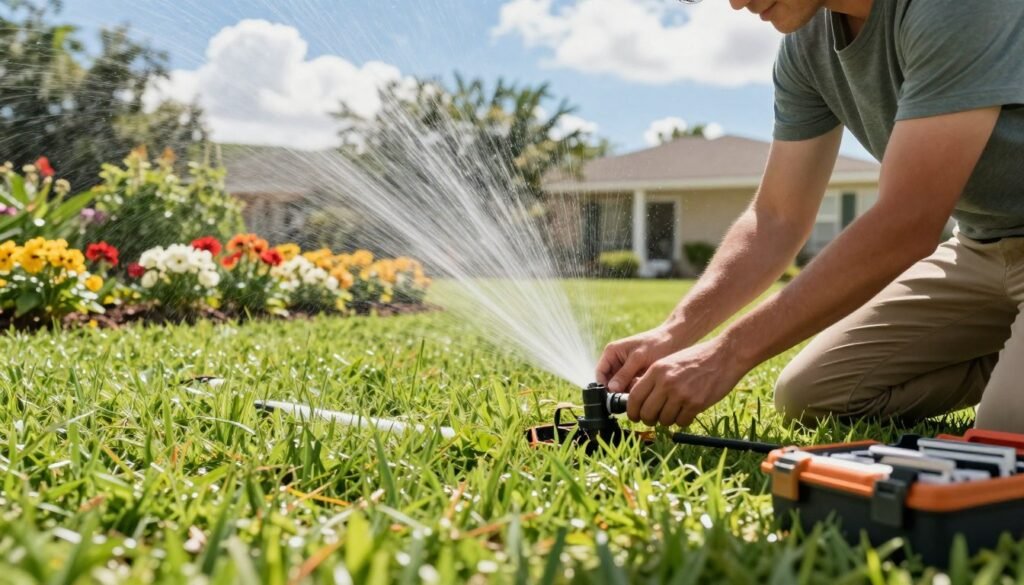
Walk through your yard and check all visible parts of your sprinkler system. Look for damage, wear, or corrosion on sprinkler heads, valves, and pipes. Sometimes, a simple visual inspection can reveal the problem, like a broken sprinkler head or a valve that’s not fully open.
Step 4: Check Water Supply and Main Valve
Make sure your water supply is turned on and the main valve is fully open. Sometimes, the main valve can be partially closed, restricting water flow. Check for leaks or damage to the main water supply line as well.
Step 5: Examine Zone Valves and Wiring
Zone valves control water flow to each zone. Check these valves for damage or malfunction. Also, inspect the wiring connected to the valves and the controller. Corroded or damaged wiring can prevent your sprinkler zone from working.
As one expert notes,
“Regular maintenance of your sprinkler system’s valves and wiring can prevent many common issues.”
Step 6: Test Individual Sprinkler Heads
Test the individual sprinkler heads in the problematic zone. Look for clogged nozzles, misaligned heads, or other damage. Cleaning or replacing faulty sprinkler heads can often fix zone issues.
By following these steps, Gainesville homeowners can often identify and fix issues with their sprinkler zones. If you’re unsure or if the problem persists, it may be time to consult a professional.
When to Call Professional Sprinkler Repair in Gainesville FL
While you can try to fix some problems yourself, some need a pro. If you’ve tried to solve your sprinkler zone issues but can’t, it’s time to call a professional.
Experts in Gainesville, FL, have the skills and tools for tough problems. They can fix your irrigation system quickly and safely.
Complex Electrical Diagnostics and Repairs
Electrical issues in your sprinkler system are hard to fix without the right tools and knowledge. Complex electrical diagnostics need special tools and skills to find and fix problems like bad wiring or broken solenoids.
A pro can find and fix electrical problems. They might replace broken parts or rewire your system.
Underground Pipe Location and Excavation
Finding underground pipe problems is hard without the right tools. Experts use special tools to locate underground pipes and find leaks or damage.
After finding the problem, they might need to dig to fix it. This is done carefully to avoid harming your lawn.
Controller Replacement and Reprogramming
If your sprinkler controller is old or broken, a pro can help. They can replace it with a new one that has better features like weather-based watering.
They can also set up your new controller right. This makes sure it works well for your lawn and local weather.
Complete Zone Valve Assembly Replacement
Zone valves control water flow in your lawn. If one fails, you might need to replace the whole assembly.
A pro can check your zone valve and replace it if needed. This keeps your system working well and saves water.
Knowing when to call a pro for sprinkler repair in Gainesville, FL, is key. It helps keep your system running right. Whether it’s electrical problems, pipe issues, controller or valve replacements, getting help when needed saves time and money.
Selecting the Right Irrigation System Repair Service in Gainesville
Choosing the right repair experts is key to fixing your sprinkler system. A broken system can waste water, increase your bills, and harm your landscape. So, it’s important to pick a trusted Gainesville irrigation system technician who can solve the problem quickly.
Before you hire a repair service, there are important things to think about. This ensures you make the best choice. Here are some key points to consider:
Florida Irrigation Contractor Licensing Requirements
In Florida, irrigation contractors need a state license. It’s essential to check if your chosen repair service has the right licenses. You can check a contractor’s license on the DBPR website.
- Check for the required licenses and certifications.
- Verify the contractor’s experience with irrigation system repairs.
- Look for reviews and testimonials from previous clients.
Experience with Gainesville-Specific Issues
A repair service familiar with Gainesville’s challenges will do a better job. They know how to handle problems like hard water and sandy soil. Local experience means they can offer solutions tailored to Gainesville homeowners.
“A local Gainesville sprinkler system expert will have the knowledge and experience to diagnose and repair your irrigation system efficiently.”
Service Warranties and Guarantees
Good repair services offer warranties on their work. This gives you peace of mind. Look for services that guarantee their repairs for a reasonable time. This protects you if the problem comes back.
| Service Provider | Warranty Period | Emergency Service Availability |
|---|---|---|
| ABC Irrigation Services | 1 Year | 24/7 |
| XYZ Sprinkler Repairs | 2 Years | 24/7 |
Emergency Repair Availability
Sprinkler zone failures can happen anytime. Having emergency repair services available is very helpful. Look for a service that offers 24/7 emergency repairs to reduce downtime and prevent further damage.
By considering these factors and choosing a reliable Gainesville sprinkler system expert, you can ensure your irrigation system is fixed efficiently. This will get your landscape back to its best state.
Preventive Maintenance for Gainesville Sprinkler Zone Systems
Keeping your sprinkler system in good shape is key for it to last long and work well in Gainesville’s weather. Regular care keeps your lawn looking great and saves water and money.
Having a maintenance plan helps spot problems early. This saves you time and money later on. Here are important things to remember:
Seasonal Inspection Schedule for North Florida
Gainesville, in North Florida, has different weather seasons. A seasonal check helps adjust your sprinkler system to these changes.
- Spring: Look for winter damage, adjust sprinkler heads, and make sure everything covers the lawn right.
- Summer: Water more often, check for leaks, and clean filters.
- Fall: Adjust for cooler weather, water less, and drain the system if needed.
- Winter: Winterize to avoid freezing and damage.
Regular Valve Cleaning and Maintenance
Zone valves are vital for your sprinkler system. Cleaning and maintaining them regularly stops clogs and corrosion.
Steps to clean and maintain valves:
- Turn off the main water supply.
- Take apart the valve and clean the filter and other parts.
- Look for wear and tear, and replace parts if needed.
- Put the valve back together and test it.
Controller Programming Updates and Rain Sensor Checks
The controller is the heart of your sprinkler system. Keeping its programming up to date and checking rain sensors ensures efficient watering.
- Change the controller settings for the season.
- Make sure rain sensors are clean and working right to avoid watering in the rain.
Annual Professional System Evaluations
While DIY care is important, a yearly check by a pro can find issues you might miss.
A professional can:
- Check the whole system for leaks, clogs, and other problems.
- Give advice on how to improve and fix things.
- Make sure the system is using water efficiently and keeping your lawn healthy.
Conclusion
Fixing sprinkler zone problems is key to a healthy lawn in Gainesville, FL. We’ve looked at signs of trouble, local factors, and DIY fixes for homeowners. This helps keep your landscape looking great.
Knowing why sprinkler zones fail is important. Issues like wiring problems, water pressure changes, and climate effects need fixing. By finding the cause, you can fix or replace parts to make your system work right.
If you’re not sure what to do, get help from a licensed irrigation expert in Gainesville. They can solve complex problems and make sure your system works well. This includes fixing sprinkler zone issues and troubleshooting.
Quickly fixing sprinkler zone problems saves water and money. It also keeps your yard looking beautiful. Start fixing your sprinkler zone issues today for a lush, green outdoor space.
FAQ
What are the most common reasons for a sprinkler zone not working in Gainesville?
In Gainesville, sprinkler zones often fail due to a faulty solenoid or a cut wire underground. Stuck valves from hard water minerals are also common. Sometimes, it’s just a mistake in your controller settings.
How can I tell if I have a sprinkler zone detection issue in Gainesville?
If your controller shows a zone is on but no water flows, you might have a problem. Look for “Error” or “Fault” codes on your controller. This usually means a wire break between the timer and valve.
What is the first step in irrigation system troubleshooting in Gainesville?
Start by testing the zone manually at the controller. If it doesn’t work, check the valve box for loose or corroded wires. Florida’s humid climate can cause these issues.
When is it time to hire a professional gainesville irrigation system technician?
Call a technician if you suspect a wire break under your driveway. Or if you need to find a buried valve box. Also, for complex electrical faults that need a multimeter.
Can lightning strikes in Alachua County cause my sprinkler zones to fail?
Yes, lightning can damage your system. It might fry the controller or melt wire insulation. After a storm, check your system with experts to ensure it’s safe.
What does a typical sprinkler system diagnostic in Gainesville involve?
A diagnostic includes checking the transformer and solenoids. It also looks for pressure leaks in the main line. This ensures everything works right from the clock to the nozzle.
Why is regular gainesville sprinkler system maintenance so important?
Maintenance is key in Gainesville’s growing season. It prevents clogs and ensures your rain sensor works. Regular checks also help follow water restrictions and avoid expensive turf loss.
What should I look for when choosing an irrigation system repair service in Gainesville?
Look for a service that’s licensed and insured. They should know Florida’s soil and offer a good warranty on parts like Irritrol valves or K-Rain rotors.
Why is my water pressure weak in only one specific zone?
A weak pressure in one zone usually isn’t a main supply issue. It might be a faulty valve diaphragm, a damaged lateral pipe, or clogged sprinkler heads.
How do I find a specialist for sprinkler repair in Gainesville FL?
For reliable repair in Gainesville FL, find contractors with good local ratings. They should specialize in “wire tracing” and “valve locating.” They need specific tools that handymen often lack.

0 Comments